
fennica is a 10-day pop-up event highlighting the "manufacturing" of Sendai and Miyagi.
2018.03.05

With the theme of "bridging design and craft," fennica, which handles traditional Japanese handicrafts, will hold a 10-day pop-up event highlighting Sendai and Miyagi at "BEAMS JAPAN 5F fennica Studio (Shinjuku)." It will be held.
< fennica > visits producers who ``make things'' with honesty, earnestness, and commitment, and the crafts and food of Sendai and Miyagi that we have gathered from what we have seen and heard are items that are difficult to purchase unless you go there. Additionally, during the event period, there will be a tasting event for the whiskey "Date" and a sales event for indigo and blue kokeshi dolls. Please take this opportunity to visit us.

Indigo Kokeshi/Blue Kokeshi for sale
Born from an idea by the director of fennica, the beautiful blue kokeshi dolls created by Togatta kokeshi maker Yasuhiro Sato are popular items that are always sold out. Blue kokeshi dolls made with the dye used in traditional kokeshi dolls, indigo kokeshi dolls painted with indigo, and other new kokeshi dolls will be on sale at the same time during the second half of the exhibition.
Release date: March 24th (Sat) ~
* Sales methods such as numbered ticket distribution will be announced later on the fennica label blog.
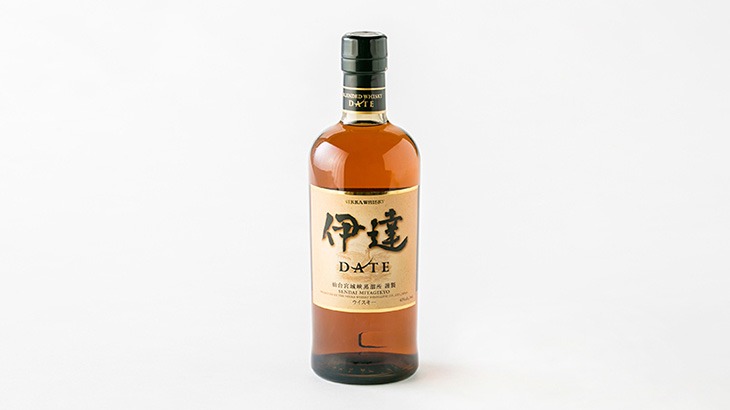
Whiskey “Date” tasting event
A tasting event for "Date," a blended whiskey sold exclusively in Miyagi Prefecture that takes advantage of Nikka's unique characteristics of "Cafe Malt" and "Cafe Grain," will be held on Saturday, March 17th and Sunday, March 18th. Please try the powerful and rich flavor that spreads in your mouth and the sweet and gentle aftertaste. *Those under 20 years of age and those driving a car are not allowed to sample.
PRODUCT
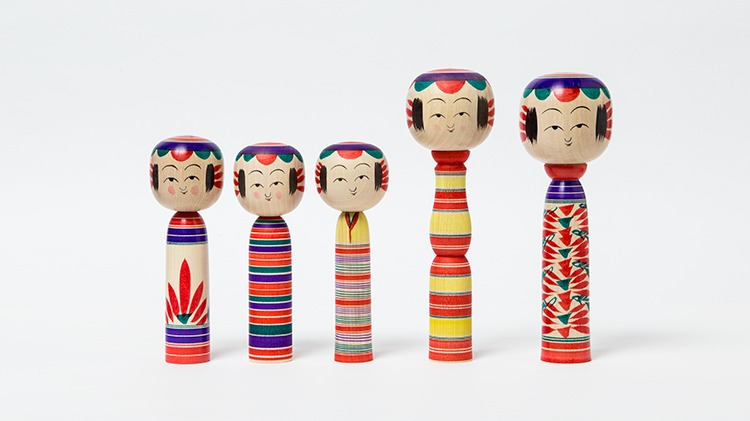
Kamata Kokeshi shop (Shiraishi City)
Yajiro-style kokeshi doll workshop has been in operation since my grandfather and father's generation. His grandfather, Bunichi, was the creator of the kokeshi dolls that were in the collection of Charles and Ray Eames. Takashi Kamata, a third-generation craftsman who began training as a woodworker in 1971, is well-regarded for his potter's wheel skills, and creates adorable kokeshi dolls in a variety of shapes and colors, centering on his grandfather's molds.
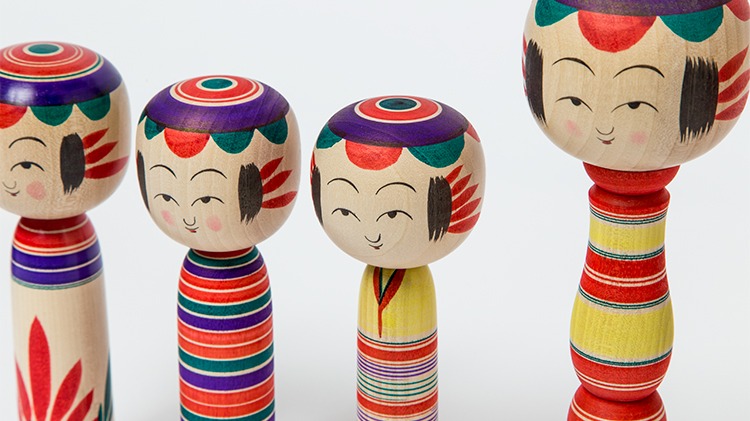
Kamata Kokeshi shop (Shiraishi City)
Yajiro-style kokeshi doll workshop has been in operation since my grandfather and father's generation. His grandfather, Bunichi, was the creator of the kokeshi dolls that were in the collection of Charles and Ray Eames. Takashi Kamata, a third-generation craftsman who began training as a woodworker in 1971, is well-regarded for his potter's wheel skills, and creates adorable kokeshi dolls in a variety of shapes and colors, centering on his grandfather's molds.

Sato Paper Workshop (Shiraishi City)
Shiroishi rubon-dyed paper is created by applying konjac paste to washi paper, letting it dry, and then dyeing it to create an uneven pattern. Fumiko Sato is passing on the techniques laid down by her father-in-law. Paper with beautiful patterns and feminine colors is useful for making paper lanterns and Japanese dolls, and you can enjoy the strength and fluffy texture of paper that makes it hard to believe that it is paper.

Sato Paper Workshop (Shiraishi City)
Shiroishi rubon-dyed paper is created by applying konjac paste to washi paper, letting it dry, and then dyeing it to create an uneven pattern. Fumiko Sato is passing on the techniques laid down by her father-in-law. Paper with beautiful patterns and feminine colors is useful for making paper lanterns and Japanese dolls, and you can enjoy the strength and fluffy texture of paper that makes it hard to believe that it is paper.

Sato Paper Workshop (Shiraishi City)
Shiroishi rubon-dyed paper is created by applying konjac paste to washi paper, letting it dry, and then dyeing it to create an uneven pattern. Fumiko Sato is passing on the techniques laid down by her father-in-law. Paper with beautiful patterns and feminine colors is useful for making paper lanterns and Japanese dolls, and you can enjoy the strength and fluffy texture of paper that makes it hard to believe that it is paper.


Mito Minoru Kata Dye Studio (Iwanuma City)
Born in 1947 in Sendai City, Miyagi Prefecture. After studying at the Kuwasawa Design Institute, he studied under Keisuke Serizawa, a Living National Treasure of stencil dyeing. Within two months of starting his career, he was selected for his first exhibition at the Japan Folk Crafts Museum, and in 1975 he was also included in Keisuke Serizawa's solo exhibition in Paris. The following year, he became independent and set up a workshop in Iwanuma City, Miyagi Prefecture, where he produces stencil dyeing with original designs such as animals, plants, and geometric patterns.

Mito Minoru Kata Dye Studio (Iwanuma City)
Born in 1947 in Sendai City, Miyagi Prefecture. After studying at the Kuwasawa Design Institute, he studied under Keisuke Serizawa, a Living National Treasure of stencil dyeing. Within two months of starting his career, he was selected for his first exhibition at the Japan Folk Crafts Museum, and in 1975 he was also included in Keisuke Serizawa's solo exhibition in Paris. The following year, he became independent and set up a workshop in Iwanuma City, Miyagi Prefecture, where he produces stencil dyeing with original designs such as animals, plants, and geometric patterns.


Workshop Kamagami (Matsushima Town)
Kama-jin, a kettle god, has been passed down only to a limited number of areas in northern Miyagi prefecture and southern Iwate prefecture, and has been displayed in kitchens and stoves as a god of fire protection, protection against evil spirits, and family safety. Mr. Numakura of the workshop Kamagami studied under Mr. Kunio Oba, who is said to be the last master of making kamagami, and is one of the few craftsmen who continue to make kamagami to this day. The Kama-gami, carved from hard wood such as chestnut or cypress with a chisel, has a scary-looking face at first glance, but it also has a gentle, mysterious charm.


Akebi vine work (Osaki City)
We collected Akebi vines that grow naturally in the Satoyama area, and categorized them into more than 10 types based on their thickness, color, etc. It is carefully and firmly woven using a wooden pattern, making it fine and durable. It is characterized by not easily losing its shape. The Akebi vine work created by craftsmen with over 45 years of experience in this field gains more flavor and texture the more you use it, making it a companion to your life for a long time.

- Event period
- March 16th (Friday) - March 25th (Sunday), 2018
- Holding store
- BEAMS JAPAN 5F fennica STUDIO (Shinjuku)